

Explore the alpine landscapes around the Ubaye valley
Ubaye valley
Entering the Ubaye through the light: first reliefs, first sensations
It only takes a few turns to feel that you are changing worlds. The slopes steepen, the rock grows lighter, the forests alternate with clearings where the grass takes on an almost golden hue. Around the valley, the alpine landscapes do not just happen to be beautiful: they are readable, like a relief map that tells the story of glaciers, torrents and human passages. Villages appear in touches — a church, a bridge, a row of larches — then disappear again behind a spur. Here, the mountain is not a static backdrop: it guides the gaze and sets a rhythm.
To get into the mood, you can start with an overall panorama thanks to a resource like Ubaye Valley: a territory between lake and mountains, which helps to locate at a glance the major ensembles: water, ridges, slopes and inhabited areas. This then makes it possible to choose an approach: rather contemplative observation (viewpoints, lakes, mountain pastures), or active exploration (passes, trails, whitewater activities).
A relief in tiers: understanding the landscapes to better explore them
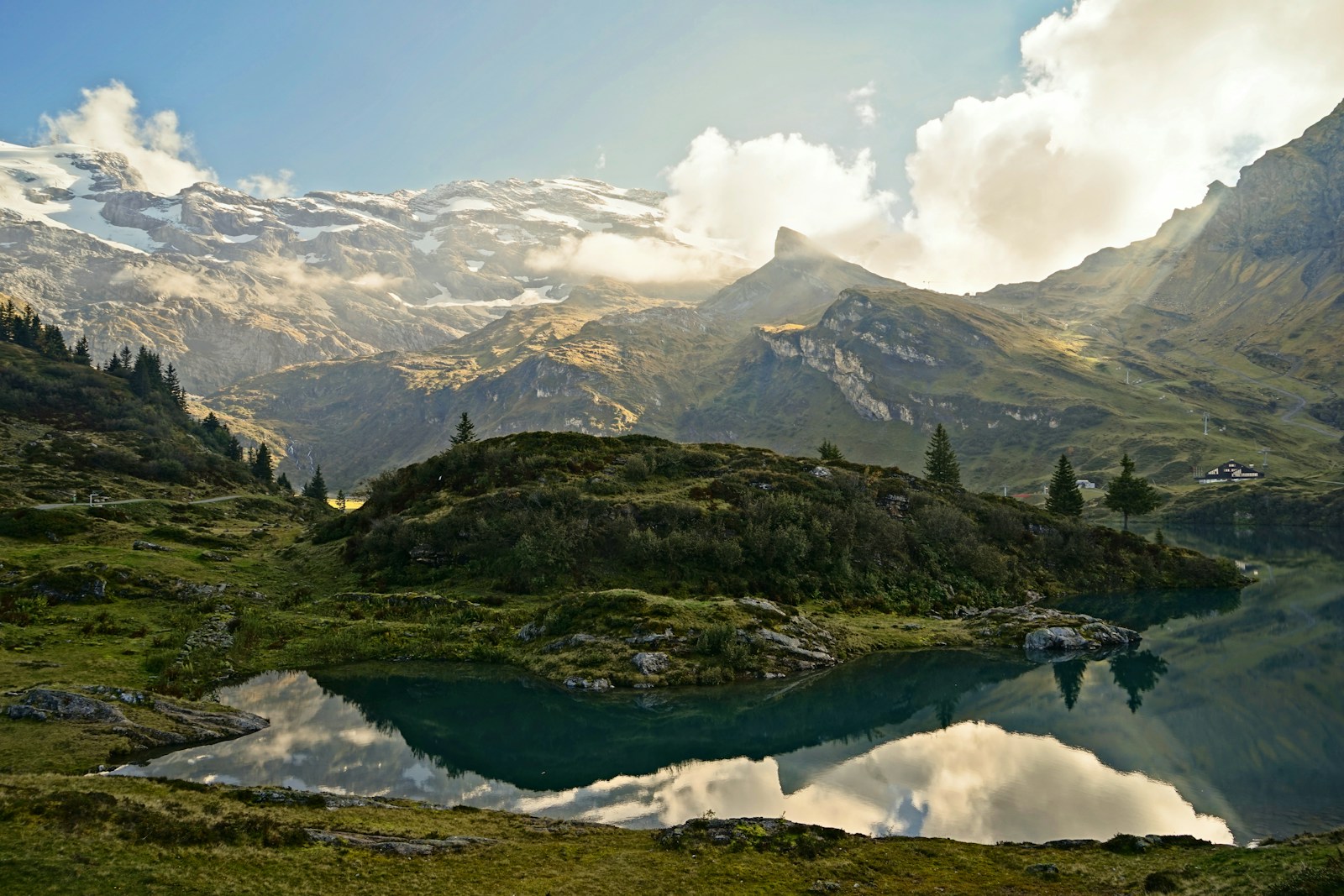
Exploring the alpine landscapes around the Ubaye means accepting a geography in layers. At the bottom, the valley floor draws a lifeline: roads, hamlets, meadows, and the ribbon of the river. Higher up, the landscape fragments: wooded slopes, avalanche chutes, rock bars and open pastures. At the very top, ridges and summits offer a more mineral, almost austere reading, where vegetation clings in patches. This tiered division is a practical key: it indicates likely weather, temperature, wind exposure, and even the sound atmosphere (rushing water below, mineral silence at altitude).
The transitions are particularly striking in the Southern Alps: the light there is often sharper, the contrasts more pronounced, and the larch forests — very present — create atmospheres that change radically with the season. In spring, swollen torrents cut through the landscape; in summer, the alpine pastures open like amphitheaters; in autumn, the larches become golden torches; in winter, the reliefs simplify and reading the slopes becomes paramount.
Water as a guiding thread: river, lakes, wetlands and gorges
In the Ubaye, water is not only an element of freshness: it is a force that sculpts, carries, and carves. The course of the river, the tributaries and the torrents tell the story of the slope, the rocks, and melting episodes. Walking along the water means observing the mountain at work: reshaped banks, polished pebbles, variations in color depending on materials. Some sections offer grand openings onto the ridges, while others narrow and give the impression of a natural corridor.
This presence of water unfolds in several landscapes. Gorges and narrows add a spectacular and sometimes sonic dimension, with the roar rebounding off the walls. Conversely, wetlands and grassy flats soothe the eye: you see a mosaic of vegetation, insects, birds, and reflections that double the mountains. Finally, the high-altitude lakes — when you gain elevation — function like mirrors: they fix the sky and give scale to the summits.
La Villa Morelia - Best Price Official Site
For a perspective oriented around must-sees and activities along the water, the page Ubaye Valley and Barcelonnette – Crazy Water Rafting can inspire a program where the river becomes the center of gravity of the stay, between observation and sensations.
Viewpoints and overlooks: learning to read the valley from above
Gaining altitude around the Ubaye immediately changes perception. From the valley floor, you follow the lines; from the overlooks, you understand the volumes. The slopes are organized like superimposed planes: first the meadows and woods, then the alpine pastures, finally the ridges. The eye spots details invisible from below: old terraces, mule tracks, breaks in slope that betray a moraine, shifts in tone that indicate a different rock.
To make the most of these viewpoints, a simple rule helps: choose a time when the light comes to shape the reliefs. In the morning, east-facing slopes are revealed; in late afternoon, the shadows lengthen and highlight the hollows, ridges, folds. And when the sky partially clouds over, shafts of sunlight create natural spotlights that make the scene almost theatrical.
Alpine pastures, larch forests and clearings: the living landscape of summer
In summer, the Ubaye reads like a patchwork. The alpine pastures draw wide open surfaces, often slanted, punctuated by rocks and flats where you can sense the presence of a water point. The larch forests, for their part, are a world apart: they filter the light without extinguishing it, and let you see far between the trunks. You constantly move from one atmosphere to another: sun exposure, the smell of resin, the buzzing of insects, then the cooler air when a torrent crosses the shade.
These are also landscapes of use. The alpine pastures are not only photogenic: they tell of pastoralism, transhumance routes, the maintenance of slopes. They remind us that alpine panoramas are often the result of a balance between nature and human activities. Observing the huts, discreet fences, traces of trails is a way to read local history without entering a museum.

Mineral ambiances: scree slopes, rocky bars and panoramic ridges
Above the forests, the scenery changes suddenly: the green diminishes, stone dominates, and the shapes become more austere. The scree slopes are fascinating to look at — immobile rivers of pebbles — and they require caution when you cross them. The rocky bars, for their part, structure the horizon: they cut the mountain into levels and create natural walls that play with the light.
On the ridges, the landscape both simplifies and expands. The valleys reveal themselves, the watershed lines appear, and you better understand how historic routes chose their passages. Even without aiming for a technical summit, walking near the high lines gives a rare feeling of freedom: the wind carries sounds far, and you feel at the heart of geography.
Emblematic trails: composing an exploration at the pace of walking
Around the Ubaye, walking is the most precise tool for discovering landscapes. It demands gradualness: you see the transitions, you feel the microclimates, you understand why a contour line becomes a logical path. The emblematic routes often have one thing in common: they string together several ambiances in one outing — valley bottom, forest, alpine pasture, then viewpoint — offering a natural synthesis of the territory.
To get inspired by route ideas focused on variety of scenery, the content Discover it through its emblematic trails provides a useful approach: choosing paths that tell something, rather than aiming only for a performance or an elevation gain.
Walking landscape : three simple reflexes
First reflex: lift your head regularly. The most beautiful details are not always at the end of the path, but above — a ridge, a couloir, a distant waterfall. Second reflex: look behind you. The same valley changes completely depending on the angle, and villages often take on a different look when seen from above. Third reflex: accept pauses. Alpine landscapes are also perceived over time: the race of the clouds, the wind in the larches, the variations of color on a wall.
Gentle routes and accessible panoramas: explore without pushing yourself
You don't need to aim for long or committed outings to feel the power of the landscapes. Around Barcelonnette and the neighboring sectors, there are accessible walks and hikes that already allow you to cross forests, clearings, torrent banks and open viewpoints. These gentle itineraries are ideal for a first discovery, for a family stay, or for days when you want to prioritize contemplation.
La Villa Morelia - Best Price Official Site
If the goal is to put together a more relaxed stay, with short but scenery-rich outings, this resource can help: Easy hikes around Barcelonnette for a relaxing stay. The idea is to multiply landscape experiences, rather than betting everything on a single big day.
When the sky dictates the itinerary: weather, exposures and safety in alpine terrain
In the Alps, the landscape changes quickly because the weather changes quickly. The same ridge can be welcoming in the morning and hostile in the afternoon if clouds catch on the summits. Reading exposures (adret/ubac) is essential: a sun-facing slope dries faster, a shaded slope retains moisture, sometimes late snowfields. These details influence comfort as much as safety.
Exploring the landscapes around the Ubaye also means knowing how to forgo too high an altitude when thunderstorms threaten, or preferring a forest loop when the wind strengthens. The important thing is to keep the landscape experience: a larch forest under a changing sky can be as memorable as a summit, especially if you take the time to look at the play of shadow and light.
A valley at the gates of a large protected area: the mountain in its wild version
The feeling of intact nature is one of the strong markers of the Ubaye. Certain sectors give the impression of having remained distant from major developments: remote valleys, slopes where wildlife remains visible, silent hollows. This wild dimension is not only aesthetic: it influences the way you move (discretion, respect), observe (binoculars, patience) and understand (tracks, habitats).
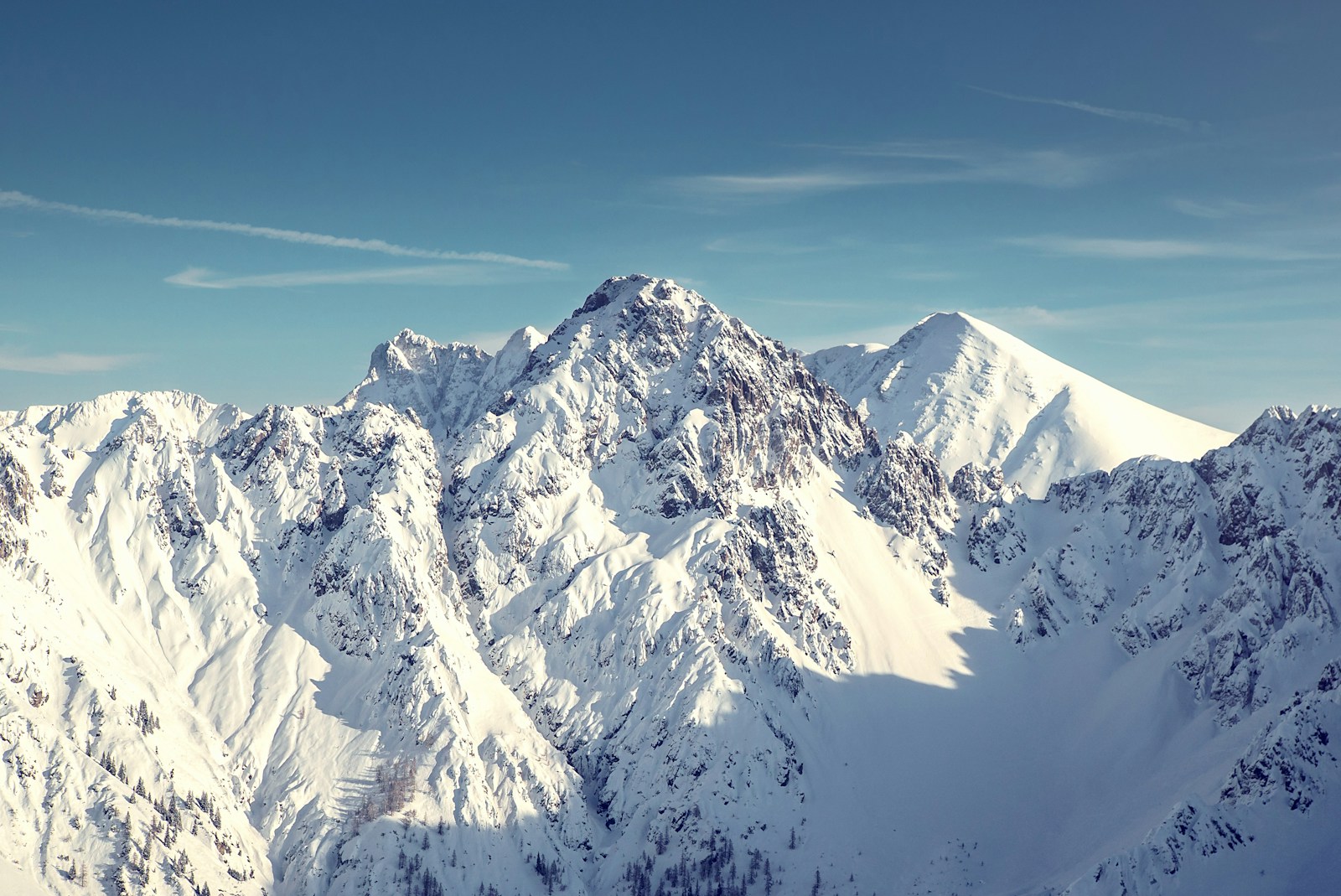
To place this atmosphere in a broader context and better understand the valley’s place within a major natural ensemble, the page Ubaye Valley is a relevant entry point, notably to link the landscapes observed in the field to the logic of a preserved mountain territory.
Compose an alpine road trip: string landscapes together without skimming them
Around the Ubaye, exploration can also be done on the move: alternate short trips and walks, choose a pass or a village as a turning point, stop as soon as a viewpoint calls . The key is not to turn the valley into a simple passage corridor. It is better to select a few areas, devote time to them, and vary the hours of the day to see how the landscape transforms.
In this logic, a thematic and progressive itinerary can be a good base to organize stages and atmospheres: Discovering the Alpes de Haute-Provence – Ubaye. You can then adapt according to the season, how you feel at the time, and the weather.
Prepare your outings: maps, landmarks, and local terrain culture
In an alpine valley, preparation makes exploration freer. Knowing where you are going allows you to deviate at the right moment: a detour to a clearing, a diversion to a viewpoint, a variant to avoid a too-hot slope. Maps also help to understand what you see: a ridgeline explains a watershed boundary; a tight contour indicates a steep passage; a plateau signals a possible alpine pasture.
For a practical synthesis oriented toward preparation (scouting, map, overall understanding), Ubaye Valley: the complete guide can serve as a support point. The goal is not to pile up information, but to leave with a few solid landmarks to better enjoy the landscapes once outside.
Where to settle to explore better: the importance of a comfortable base camp
Alpine landscapes are savored more when you can recover properly. A well-located accommodation makes it possible to go out early to enjoy the morning light, return before summer storms, or split explorations: a short loop on day 1, a viewpoint on day 2, a forest immersion on day 3. This logistical comfort is often what turns a successful stay into a true mountain experience.
La Villa Morelia - Best Price Official Site
If you are looking for an option to establish a pleasant and well-appointed starting point, you can consider Stay in a charming hotel in the heart of the Southern Alps, in order to easily combine nature outings, moments of rest, and local discoveries.
Extend the experience: alpine landscapes and life moments
Exploring the Ubaye often means coming back with very precise images: a line of ridges in low sun, a still lake, a forest crossed by light, a village clinging to the slope. But it is also a territory where you can associate landscapes with memorable moments — reunions, celebrations, timeless interludes. The mountain gives a particular intensity to shared moments, because it imposes a grand and sincere setting.
For those who imagine an event at the heart of these settings, these inspirations can help envision a celebration at altitude: Elegant wedding in a character hotel in the mountains and Prestige hotel or historic estate for a chic wedding.
Final tips for exploring without damage: sobriety, respect, attention
The alpine landscapes around the Ubaye are powerful, but also fragile. Stay on the trails in sensitive areas, limit noise, observe wildlife from a distance, take your trash back, avoid shortcuts that erode slopes: these simple gestures protect what makes the place beautiful. And they often improve the experience itself, by encouraging a more attentive, less hurried exploration.
Finally, if you wish to turn this exploration into a structured stay with a direct booking, you can access La Villa Morelia - Best Price Official Site, a good base, a well-read forecast and a few carefully chosen маршруты: that's all that's needed to fully enter the mountains and let the landscapes of the Ubaye guide you.


Villa Morelia Hotel**** 9 avenue des Mexicains 04500 Jausiers France tel +33 (0)492846778 inforesa@villa-morelia.com