

Destination wedding in an Alpine castle
wedding château alpes
An alpine château as a backdrop: the raw elegance of the peaks
Choosing a destination wedding in an alpine château is deciding that the landscape will be an integral part of the ceremony. Here, the contours aren’t a simple backdrop: they shape the light, set the pace of the days, and give rare intensity to key moments. In the morning, the air is crisp and bright; in the afternoon, shadows lengthen across the stone façades; in the evening, the mountains turn into theatrical silhouettes. In this setting, every element—the vault of a salon, a terrace overlooking a valley, a stone staircase leading to the gardens—becomes a natural stage for emotions.
A château at altitude or in the foothills offers a unique contrast: heritage refinement and the power of living nature. People come for the nobility of the materials, the sense of long time, the acoustics of an inner courtyard, but also for that feeling of being far away, even when access remains easy. For guests who travel, this sense of escape is precious: it turns a wedding weekend into a complete experience, almost an initiatory journey.
The right château: the place’s personality, volumes, and hosting logic
In the Alps, not all châteaux lend themselves to the same type of celebration. Before falling in love with a façade, you need to look at the place like an organizer: guest flow, Plan Bs in case of fickle weather, spaces for vendors, quiet areas for families, and the ability to host on site (or in the immediate vicinity). A successful alpine château for a destination wedding is a château that knows how to host, without losing its soul.
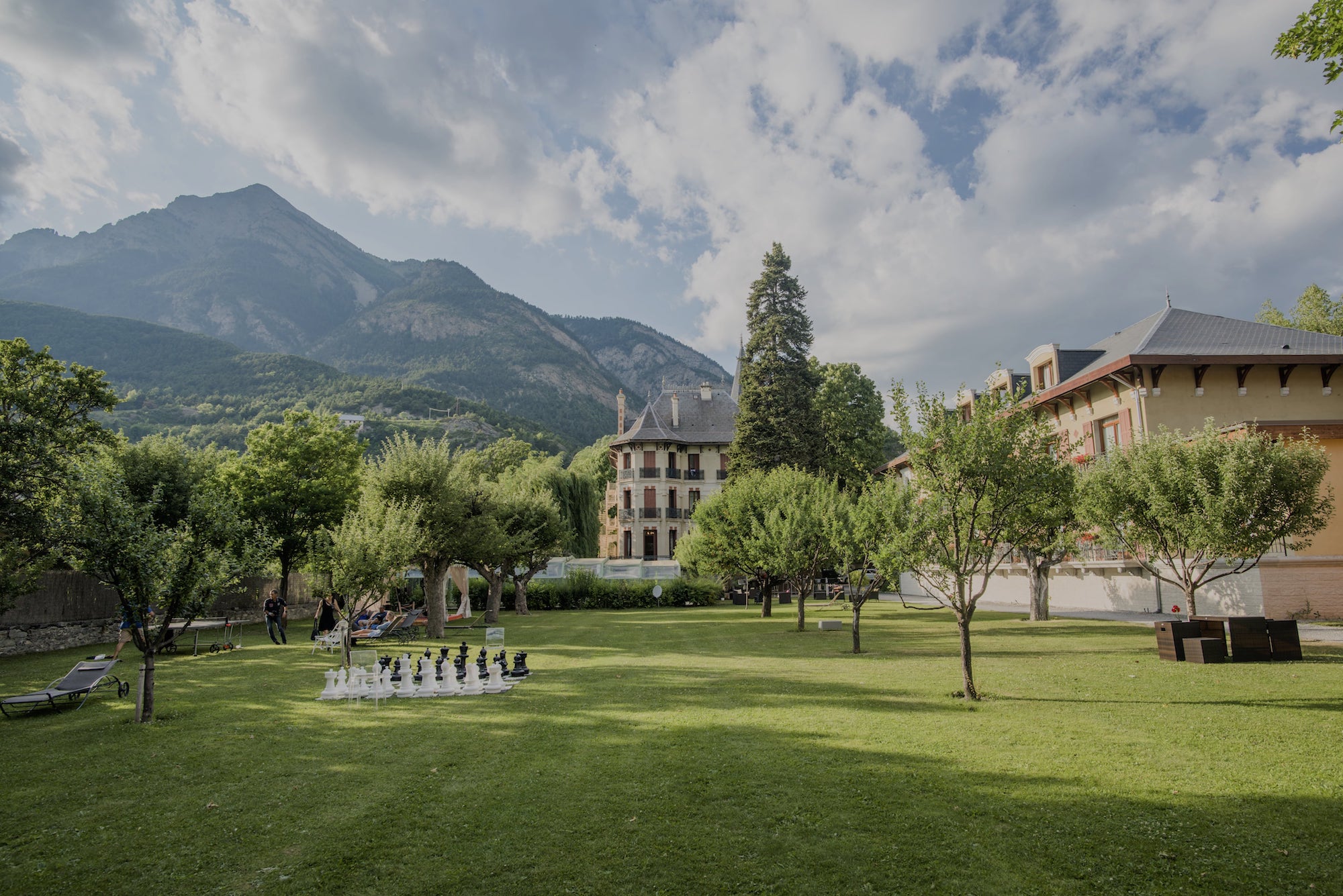
The question of volumes is central. A large reception hall makes it possible to stay in the same place from the ceremony to dinner if necessary; a courtyard can host a cocktail with a view; a salon can be transformed into a more intimate after-party space; a library can become a photo corner or an elegant smoking room. In this type of venue, the secret is to orchestrate the sequences: arrival, ceremony, cocktail, dinner, first dance, party—without giving the impression of moving house at every step.
To fuel your thinking about the atmospheres and expectations around a heritage setting in the mountains, this content can serve as a point of reference: in a historic place in the h ur of.
Four seasons, four atmospheres: choosing the date the way you choose a staging
The mountains change throughout the year, and that’s an advantage. A destination wedding in an alpine château doesn’t have the same signature in January, May, or September. In winter, the château becomes a refuge: candles, wood, textiles, a fireplace fire, reinvented mulled wine, and a low light that enhances materials. In spring, the emotion comes from the contrast between peaks still snow-covered and the first blooms. In summer, you favor the outdoors, long evenings, and tables under the stars. In autumn, you enjoy coppery tones, a more hushed atmosphere, and more generous gastronomy.
La Villa Morelia - Best Price Official Site
The season should also be chosen according to your priorities: do you want very postcard-like photos with snow? an outdoor cocktail? a ceremony in the sun? a more stable budget outside peak season? an extended weekend to offer activities? The Alps allow it all, provided you embrace the choice. To picture yourself in a wintery ambiance between poetry and well-managed constraints, you can read Winter, a journey between dream and reality.
Destination wedding logistics: arriving, staying, and living on site
The success of a destination wedding depends as much on emotion as on the simplicity perceived by guests. In the mountains, you anticipate transportation and comfort: transfers from a train station, shuttles from the nearest airport, check-in times, luggage handling, a traffic plan if the road is winding, and clear communication to avoid stress. Guests need to understand quickly: where to park, when to leave, how to dress warmly, and what to bring (shoes, a light sweater, sunglasses… sometimes all in the same day).
A much-appreciated format is to set everyone up within a small perimeter: château + partner accommodations + points of interest accessible on foot or by shuttle. This turns the celebration into a pause, and frees the couple from mental load. Ideally, you offer a welcome starting the day before (or in the morning), with a simple moment: tasting, informal aperitif, or guided walk.
If you like the idea of extending the immersion with charming accommodations and smooth organization, booking can be done here: La Villa Morelia - Best Price Official Site.
The ceremony: capturing intimacy in immensity
In an alpine château, the ceremony takes on a particular dimension: nature expands silences, and the architecture focuses attention. Many couples choose an exchange of vows outdoors (terrace, courtyard, garden), then an elegant fallback indoors if the sky closes in. The important thing is to preserve the moment: the procession, orientation, music, discreet sound system, and the angle of gazes (your guests must see, but also feel).
A few details make the difference: plan throws or parasols depending on the season, set up a stable aisle (gravel and heels don’t always mix well), choose floral arrangements that withstand wind, and opt for short but powerful rituals. The mountains invite the essential. A well-chosen reading, a promise spoken clearly, an embraced silence: in this setting, everything rings true.
The cocktail and dinner: mountain gastronomy, château sophistication
A reception in an Alpine château shines when it combines local generosity with very refined execution. You can opt for a chef-driven cuisine inspired by the Alps (wild herbs, aged cheeses, lake fish, dry-aged meats, red berries, honey, reinvented génépi), without slipping into folklore. The best tables know how to evoke the mountains without heaviness: textures, broths, smoky notes, precise sauces, and pastries that play on freshness.
For the cocktail hour, the outdoors are perfect: viewpoints, light, natural photos. But plan a Plan B with the same emotional impact: a grand salon, an orangery, a gallery, a vaulted room. The classic mistake is having a spectacular outdoor setup and a purely functional fallback with no charm. In the mountains, the weather is a partner… unpredictable. A Plan B must be a Plan A, take two.
Finally, a château dinner stands out for its staging: candelabras, textured table linens, artisan tableware, calligraphed menus, and warm lighting. Stone and wood absorb light: you need to add more, but delicately, to keep a cozy, enveloping atmosphere.
Photos and video: make the most of the terrain, snow, and raking light
The Alps offer naturally cinematic images, provided you plan. A scouting trip (even a quick one) helps you choose: a viewpoint spot for portraits, a staircase or corridor for more graphic scenes, a clearing or path for moving shots. Golden hours are especially pronounced in the mountains: early in the morning and at the end of the day, the light sculpts faces and adds depth to the setting.
If you’re getting married in winter, think in contrasts: a light dress on snow, a dark suit, thick textures, and suitable accessories. For comfort, plan warm breaks and a change of shoes. A good photographer will be able to direct without freezing you, but it’s your preparation that will prevent fatigue. The goal: preserve the emotion, not just create images.
Create a full weekend: gentle activities, nature, and shared moments
A destination wedding is rarely experienced in just one evening. In an Alpine château, the best gift you can offer your guests is a rhythm: a simple welcome, a bright next day, free time, and a few optional suggestions. The idea isn’t to keep everyone busy, but to make meeting up easier and to extend the magic.
La Villa Morelia - Best Price Official Site
You can imagine a guided walk before the welcome dinner, a brunch the next day on a terrace, a tasting of local products, or a wellness moment. And for those who love the outdoors, the Alps offer accessible, spectacular routes. To offer excursion ideas that fit perfectly into a wedding program, here are two useful resources: The must-do hikes around Barcelonnette and Explore the Ubaye Valley between lakes and peaks.
Alpine romance: the quiet luxury of moments for two
The château is a jewel box, but the mountains give private moments a particular intensity: a walk at daybreak, a hot chocolate shared off to the side, a detour to watch the mist rise over the valley, or a few minutes on a balcony before joining the guests. These off-schedule moments often become the most precious memories, because they belong only to you.
If you’d like to weave romantic interludes into the schedule (before the ceremony or the next day), this selection of ideas may inspire: Romantic walks in the Ubaye Valley.
Atmosphere and décor: respect the heritage, elevate without overloading
Decorating an Alpine château means dialoguing with a place that is already strong. The mistake would be to overwhelm the architecture under staging that’s too trendy or too uniform. The existing materials—stone, wood, ironwork, tapestries, frescoes—set the tone. The most successful décor is often the one that highlights: a few well-placed floral masses, candles in controlled quantity, fine fabrics, and a guiding thread in the colors (ivory, fir green, burgundy, midnight blue, or mineral tones).
For an Alpine chic aesthetic, think contrasts: transparent and raw, delicate and solid. Blown glass with branches, white flowers with dark foliage, silk ribbons on ceramic vessels. And above all: thoughtful lighting. Very warm string lights outdoors, discreet spotlights for the façade, and accent lamps inside to create zones of visual comfort.
Vendors: prioritize local know-how
In the mountains, local experience matters as much as talent. A caterer used to high-altitude roads, a DJ who knows how to manage multiple spaces, a florist who understands temperature variations, an officiant who understands wind management outdoors: all of that brings greater peace of mind. On the big day, it’s often practical details that determine comfort: a delivery at the right time, a quick setup, a clear power plan, and smooth, quiet coordination.
A wedding planner or day-of coordinator is particularly useful for a destination wedding, because they centralize information and protect your energy. The goal isn’t to over-organize, but to make everything simple, even when the mountain changes its face in a few hours.
Budget: invest in the experience rather than accumulation
The budget for a wedding in an Alpine château is better managed when you think in terms of the overall experience rather than adding up line items. Often, the setting already delivers considerable visual impact: you don’t need to pile on artifices. It’s better to invest in what truly improves the day: quality of the food, guest comfort, music, light, photo/video, and logistics (shuttles, accommodations, coordination).
The choice of season can also strongly influence the equation: certain times of year make it possible to achieve an equivalent level of service with a more stable budget, while offering a very distinctive atmosphere. Here again, the important thing is to embrace a style: cocooning winter, panoramic summer, golden autumn, bright spring.
Inspiration: when Savoie meets the art of hosting in a château
To compare venue styles and understand how a Savoyard estate can host a celebration with elegance, a reference visit can help inform your thinking: Wedding in a château in Savoie. Observing different layouts (courtyard, gardens, lounges, rooms, halls) will help you clarify your priorities: view, privacy, capacity, accommodation, and atmosphere.
Extend the stay: the art of turning a wedding into a trip
A destination wedding in an Alpine château becomes unforgettable when it stretches beyond the evening: an eve with a simple dinner, a next day with brunch and activities, even a quieter day after that for those who stay. This format reduces stress, offers more real time with your loved ones, and gives coherence to the weekend’s story. The mountains are perfectly suited to it: you can alternate celebration time and breathing space, grand panoramas and cozy lounges.
La Villa Morelia - Best Price Official Site
To draw inspiration from an experience-oriented hotel-château approach, this content can guide you: Stay in a castle hotel for a unique experience.
Conclusion: a celebration that leaves a mark, because it brings together a place, a season, and an intention
Getting married in an Alpine château means choosing a destination that is one with your story: architecture that commands respect, nature that adds grandeur, and an atmosphere that makes every gesture more meaningful. If you prioritize a strong setting, a weekend experience, and a feeling of elegant escape, then this type of wedding can become more than an event: a collective memory, rich, and deeply alive.


Villa Morelia Hotel**** 9 avenue des Mexicains 04850 Jausiers France tel +33 (0)492846778 inforesa@villa-morelia.com