

Discover Barcelonnette on foot during a stay
Walking Barcelonnette is an obvious choice from the very first steps: a human-scale town, a very crisp mountain light, views that quickly open onto the Ubaye valley, and above all a density of things to see without needing a car to do something with your day. The idea of a stay here is to slow down: walk, look up at the façades, cross through the neighborhoods as if leafing through a travel journal, then extend the stroll toward the trails that leave town gently. This guide offers you a way to discover Barcelonnette on foot, alternating heritage, local atmospheres, gourmet breaks and nature getaways, with itineraries that can be adapted to your fitness level and the season.
Getting your bearings: a first loop through the town center
To get off to a good start, treat yourself to a simple orientation loop (1 to 2 hours, no difficulty): it serves as much to understand the geography as to feel the atmosphere. Barcelonnette is very easy to discover by walking on instinct, but a framework helps you not miss the details.
Start from the center, identify the main axes that structure the town, observe how the houses sit facing the mountains. Very quickly, you’ll notice a distinctive architectural mix: a classic Alpine town, but punctuated by more surprising residences, stemming from a local history marked by comings and goings and influences from elsewhere. Take the time to stop in front of the gates, balconies, façade decorations: on foot, you see what the car erases.

If you like to travel with stop ideas already in mind (small museums, monuments, viewpoints, seasonal calendar), you can round out this first loop with official inspirations via the must-dos in the town and its surroundings. The point isn’t to tick everything off, but to spot 2 or 3 goals that will provide a common thread for your next walks.
Reading Barcelonnette as you walk: villas, façades and details that tell a story
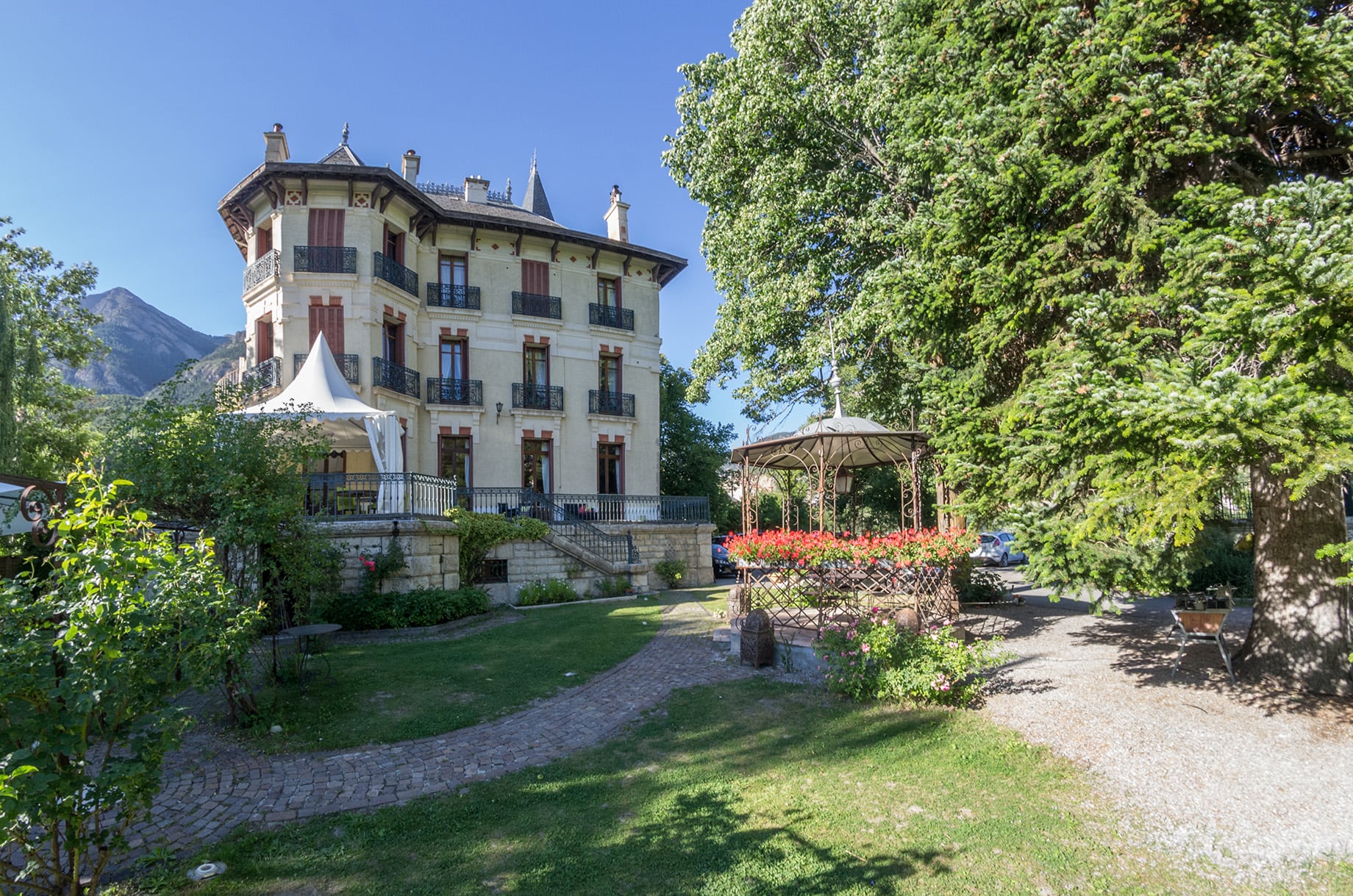
One of the joys of discovering on foot is the gradual reading of the neighborhoods. Barcelonnette has a strong visual personality: some streets can be walked like an open-air exhibition. The villas, in particular, are an excellent excuse for a slow stroll: you stop, compare, guess the eras, imagine stories.
Build a façades-and-gardens walk over 2 to 3 km, favoring quiet streets where you can walk without hurrying. Morning is ideal for the light and tranquility, especially in the off-season. Look for contrasts: a plain house next to a more ornate residence, a small wrought grille, an exterior staircase, a bay window, a line of trees. With enough attention, you’ll also see that the town isn’t frozen: some parts have the energy of a lively small town, others a very soothing residential gentleness.
Simple tip: bring a notebook (or jot down on your phone) three markers to find again on each outing: a villa that intrigues you, a view of a ridge, a place where you like the sound of the town (a fountain, a sheltered passage, a small square). During a stay, these markers become anchor points that turn a walk into a ritual.
La Villa Morelia - Best Price Official Site
Walking to the rhythm of the market and gourmet breaks
Discovering a town on foot also means accepting that your route bends to the smell of a bakery, a sunlit terrace, a conversation caught on the fly. Barcelonnette lends itself very well to this counter-height tourism, because everything is close: you can go from the center to a quieter corner in a few minutes, then come back without it becoming a logistical hassle.
The right reflex: plan a walk that ends (or begins) with a tasty moment. A 45-minute loop, a break, then a second, longer loop. This alternation is perfect for families, or when you want to spare your calves while still feeling like you’ve had a real day.
To enrich your program with additional ideas (visits, activities, highlights), you can pick from the activities and visits offered around the town. Even if you stay in 100% pedestrian mode, these suggestions help organize a varied week, especially if the weather changes.
A day on foot: heritage + nature without taking the car
Here is a simple, effective, and very satisfying scenario when you’re staying several days: devote the morning to urban heritage, then shift in the afternoon to a more nature-focused walk by setting out directly on foot.
In the morning, wander without a strict objective: streets, details, atmosphere. Take the time to step into open places, find out about temporary exhibitions, and take a coffee break. Keep an easy pace: the idea is not to burn up your energy too early.
After lunch, choose a greener outing, but a reasonable one: a 2 to 3 hour walk, with a slight elevation gain if you wish. In the mountains, the difficulty isn’t always in the distance, but in the combination distance + elevation gain + sun. Bring water, a windbreaker layer, and a snack, even for a short outing.
If you’re looking for ideas for accessible, rejuvenating walks, you’ll find a selection suited to the spirit of a stay here: nature routes to unwind gently. This type of walk is perfect for rounding out a morning in town, without setting off on a big hike.
Walking for the viewpoints: overlooks, light and photography
In Barcelonnette, viewpoints aren’t just athletic goals. On foot, you can build a quest for light: head out early, follow the shifting shadows, watch the town change tone over the hours. Photographers (even amateurs) appreciate this area because it offers clear lines: mountain silhouettes, very readable skies, contrasts of textures between stone, wood, vegetation.
For an enjoyable photo outing, choose a loop route that brings you back easily to the center. The point is to be able to extend it if inspiration strikes, or, on the contrary, to get back quickly if the weather turns. At the end of the day, favor open perspectives: when the sun drops, the relief takes on volume and the facades gain warmth.
A small tip: instead of chasing the best spots, do the opposite. Set yourself a theme (doors, balconies, roofs, trees, shadows) and let the walk guide you. The town then becomes a playground, and urban hiking a full-fledged activity.
From the center to the trails: switching over to the Ubaye valley on foot
A stay in Barcelonnette is rarely just a city experience. The Ubaye valley naturally draws you in: lakes, forests, alpine pastures, torrents, and a sense of space that makes you want to go further. The advantage is that you can start modestly: a longer walk one day, an easy stroll the next, then a real hike if your fitness follows.
To prepare these getaways without spreading yourself too thin, you can rely on an inspiration guide focused on grand landscapes: an exploration between lakes and peaks. The goal is to build a progression: first short outings, then more ambitious routes, while still keeping time for the town.
Day hikes: choose according to your level (and your desire)
When you start lengthening distances, the key is to choose a hike that truly matches your day, not just your ego. Ask yourself three simple questions: how many hours do I feel like walking? What weather is forecast (wind, storm, heat)? Do I need an easy, contemplative outing or a sporty, structured one?
A good stay-hike is one that still leaves enough energy for a shower, a quiet dinner, and a little evening stroll. It shouldn’t wear you out to the point of losing the next day. Vary the pleasures: one day a forest route, another a panoramic ridge, another a loop along the water.
La Villa Morelia - Best Price Official Site
To find route ideas that really make you want to go, you can consult a selection of the most beautiful hikes in the Ubaye valley. Use it like a menu: choose according to the season, your condition, and the time you want to devote to walking.
Walking with a guide: when calling in a pro changes everything
There are two main reasons to hike with a guide: safety (weather, navigation, terrain) and the quality of the experience (reading the landscape, wildlife, flora, local history). Even if you like independence, a guided outing during your stay can be an excellent investment: you’ll learn reference points that you’ll reuse later on your own.
During periods of intense heat, or when there is a risk of thunderstorms, a professional’s eye helps you choose the right route and adapt the plan. It’s also a very pleasant option if you’re traveling in a group with different levels: the guide adjusts the pace, suggests alternatives, and prevents the walk from becoming a test.
To organize a guided hike or a tailor-made adventure, you can look at the proposals from Montagnes d’Ubaye Trekking et Aventure Randonnée. A well-planned half-day is sometimes enough to give a whole new dimension to the entire stay.
In the evening, a different Barcelonnette: short walks and end-of-day gentleness
The benefits of evening walks are often underestimated, especially in the mountains. After the strong afternoon light, the town calms down, temperatures become more pleasant, and you rediscover a simple pleasure: walking without a goal, just to digest and breathe. It’s also the time when you hear differently: footsteps, distant voices, wind, sometimes the sound of water.
Choose a short loop (30 to 50 minutes), with no elevation gain, and keep the option to stop. If you’re a couple, it’s an excellent time to revisit your impressions of the day. With family, it’s a chance to let the children set the pace, and to turn the walk into an observation game.
Practical tips for a successful 100% pedestrian stay
Shoes: no need for very technical shoes for the city, but plan for at least one stable pair if you alternate with trails. The important thing is to avoid soles that are too smooth.
Clothing: in the mountains, layering is king. Even in summer, keep a warm layer and a light windbreaker in your bag.
Water and sun: always carry water, and think about sun protection (cap, sunglasses, sunscreen). The feeling of coolness can be misleading.
Pace: if you’re staying several days, it’s better to walk a little each day than one big day that then immobilizes you. One hour in the morning + one hour in the late afternoon is often the perfect combo.
Safety: if in doubt about the weather, give up or cut it short. A successful stay is also a stay without unnecessary risk-taking.
Where to stay to do everything on foot: the importance of a good starting point
When the goal is to discover the destination on foot, the choice of accommodation changes everything. A good base camp lets you set off early, come back easily for a break, head out again in the evening, and experience the town without constraints. It also helps maintain momentum: you walk more because everything is simple.
If you’re looking for a comfortable place to explore on foot and plan your days between the town center and nature, you can check out availability and direct bookings. On a walking-focused stay, this kind of starting point can make the difference between we’ll see and let’s go.
Walking in event mode: when a stay turns into a memorable moment
Barcelonnette can also be a setting for reunions: a birthday, a family gathering, a seminar, a celebration weekend. And in those cases, walking becomes an excellent common thread: a simple, unifying activity where everyone takes part at their own pace. A guided walk, a photo route, a morning walk before a big table… All of this creates a shared memory.
La Villa Morelia - Best Price Official Site
To imagine a format that blends comfort, organization, and a group experience, here is a useful resource on an event stay in an Alpine setting. Even without a big event, this organizational logic (high points + free time + gentle outings) works very well to make the most of a few days on site.
What if the stay opens onto a bigger project?
Sometimes, a walking trip gives rise to unexpected ideas. You come back from a stroll, you fall in love with a viewpoint, a garden, an atmosphere… and you find yourself imagining a bigger event. In the Alps, the scenery naturally supports celebrations, and walking can even become a symbol: moving forward together, taking the time, choosing a shared pace.
If your stay leads you to think about exceptional places to celebrate a life moment, you can read what makes castles so sought-after for weddings, or explore the idea of a destination wedding in an Alpine setting. Even if it’s not your immediate plan, these readings extend the journey in another way: they show how a region can become the setting for a lasting memory.
Conclusion: a town revealed step by step
Discovering Barcelonnette on foot during a stay means choosing an attentive approach: you take the time to look, to feel, to vary the intensity. You start with a calm loop in the heart of town, linger over the villas and details, plan gourmet breaks, then gradually widen out toward the valley trails. It’s a destination that rewards slowness: the more you walk, the more you see—and the more you want to walk again the next day.


Villa Morelia Hotel**** 9 avenue des Mexicains 04850 Jausiers France tel +33 (0)492846778 inforesa@villa-morelia.com