

Stay in a boutique hotel to discover the Alps differently
charming hotel Alps: treating yourself to a stay that changes the way you experience the mountains
charming hotel Alps — Choosing a charming hotel in the Alps is not just about sleeping in the mountains. It is deciding that accommodation is part of the journey on the same level as the trails, markets, lakes or viewpoints. In a human-scale place, you slow down without getting bored, observe without consuming, taste without rushing. You also discover another geography of the mountains: that of secret valleys, villages away from the crowds, cross routes and intermediate seasons. This different approach is not elitist: it relies on simple but decisive choices — a characterful address, a gentler pace, experiences rooted in the local area.
The Alps are vast and diverse. The same day can include a panoramic ascent at dawn, a swim in a high-altitude lake at noon, a heritage visit in the afternoon and a local dinner in the evening, all just minutes apart by car. The charming hotel then becomes the ideal base camp: a place you return to with joy, where you take time to talk, where you let yourself be inspired for the next day. The goal is not to do everything, but to do things better: choose activities with strong emotional value, and leave room for the unexpected.
Changing perspective: the mountains beyond the resorts
Many associate the Alps with a single pattern: resort, lift pass, slopes, après-ski. Yet there are infinite ways to approach the mountains. The first is to favor inhabited valleys, alpine towns, gently rising roads, accessible mountain pastures, hamlets where you still meet artisans and producers. In these places, the mountain is not a backdrop: it sets the pace of daily life, shapes the architecture, influences the cuisine and imposes a form of modesty.
A stay in a charming hotel precisely encourages this type of exploration. You often find personalized advice, annotated maps, off-the-radar recommendations: a viewpoint at dawn, an isolated chapel, a shepherd’s hut where you can buy cheese, a walk along a torrent. By moving away from the all-inclusive logic, pleasure is renewed: the mountains become again a terrain of gentle adventure, accessible, and surprisingly varied.
This other perspective comes with a different temporality. Getting up early to enjoy the low light, returning before summer storms, allowing a nap when the sun beats down, dining earlier after a big day: these repeated details transform the experience. Experiencing the mountains differently is not measured by kilometers but by the quality of sensations.
The charm of a place: architecture, silence, materials and care
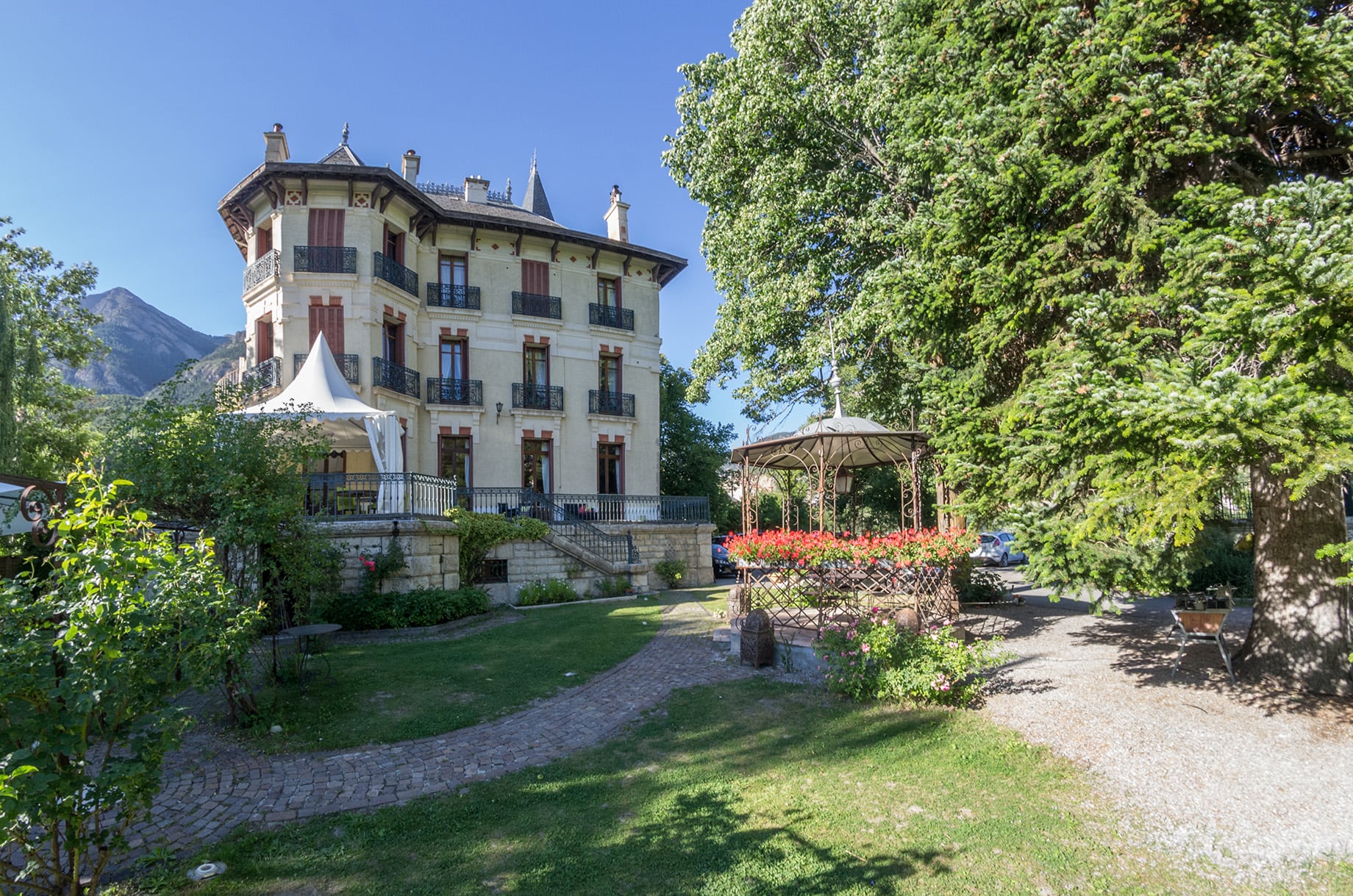
You recognize a charming hotel by things that are hard to quantify: an entrance that immediately gives a sense of calm, materials that tell of the region (wood, stone, lime), décor that avoids clichés, thoughtful lighting, the smell of wax or clean linen, a garden that invites you to sit. In the Alps, these elements take on a particular dimension because the exterior landscape is already powerful. The aim is not to compete with the mountain but to accompany it.
La Villa Morelia - Best Price Official Site
The best addresses know how to offer a cocoon without enclosing: a terrace to look at the peaks, a lounge to read when it rains, a room where you can breathe. The welcome matters just as much: a smile, availability, an ability to adapt. It is often these attentions that make the difference between a simple night and a stay you remember.
Silence is also a form of Alpine luxury. In a well-situated character hotel, you truly hear it: not the kind that does nothing, but the kind that amplifies everything — the wind, the birds, the footstep on gravel, the trickle of a fountain. This sound quality contributes to the feeling of disconnection and the depth of rest.
Experience the Alps through the plate: products, seasons and sincere tables
Discovering the mountains differently very often passes through the table. The Alps have a remarkable culinary culture, and not just fondue and raclette. You can taste locally raised meats, lake and river fish, mountain herbs, high-altitude honeys, fruits when summer is generous, cheeses with unique character depending on the alpine pastures and aging. A charming address gladly highlights this richness, sometimes with simple and precise cooking, sometimes with a more gastronomic offering.
To make the experience more authentic, the ideal is to follow the seasons: fresher, more herbal dishes in summer, more enveloping recipes in autumn, touches of citrus and spices in winter, first salads and milder cheeses in spring. And above all, accept that local does not mean uniform: from one valley to another, tastes change, as do habits.
A good stay is also one where you alternate: a refined dinner one evening, an inn the next, a picnic composed with market products the day after. The mountain provides the setting; the plate gives the nuance.
Activities that reveal the territory (without overconsuming it)
To discover the Alps differently, it is better to favor activities that showcase the natural environment and local culture without exhausting them. Hiking remains essential, but it can take many forms: a stroll beside a torrent, a gentle ascent to an alpine pasture, a panoramic loop above the larches, a forest route when it's hot, an outing at dawn to see the light reach the peaks. You can also cycle on secondary roads, take up landscape photography, go wildlife watching with a guide, or visit workshops (wood, wool, knives, jams, distillation...).
The key is to choose formats at a human scale. An overfull program turns the mountain into a checklist. Conversely, two strong activities in a day, with breathing time, give the feeling of truly having lived the place. And if the weather turns, it's an opportunity for another type of immersion: local museum, baroque church, reading, spa, or simply conversation in the lounge over an herbal tea.
Focus on the Ubaye: vast panoramas, villages and sensitive routes
Some valleys concentrate everything that makes an Alpine stay memorable: spectacular relief, living heritage, elegant villages, changing light, and a sense of the end of the world without being inaccessible. The Ubaye valley is one of those destinations that lend themselves perfectly to a different kind of stay, especially if you like to alternate nature and culture.
You will find striking viewpoints, roads that wind gracefully, and an astonishing variety of landscapes: meadows, forests, ridges, torrents, more mineral areas as you gain altitude. To plan truly memorable outings, a good starting point is this guide dedicated to Explore the iconic panoramas of the Ubaye valley, useful for choosing viewpoints and routes according to your mood (a long sporty day or a contemplative escape).
Additionally, it is pleasant to discover the villages on foot, unhurried, letting the details do their work: façades, squares, fountains, gardens. A simple idea is to follow a wandering route designed to visit Barcelonnette on foot, taking time for a coffee, a shop, an exhibition, or a market depending on the season. It’s these little interludes that give texture to the stay, beyond the grand landscapes.
The art of choosing the right season: summer, shoulder seasons and mild winter
High season has its advantages (atmosphere, open services, more stable weather), but experiencing the Alps differently often comes down to choosing dates wisely. Summer offers long days, accessible trails, a wide range of activities, and mountains more welcoming to families. It’s also a time to favor off-peak hours: early departures, long midday breaks, returns before crowds gather at certain spots. If you’re looking for ideas for places and atmospheres when the mountain is experienced in its summer version, this selection can serve as inspiration: Hotels in the Alps in summer: our 2026 selection.
La Villa Morelia - Best Price Official Site
The shoulder seasons are often magical. In June the mountains are luminous, flowers burst, torrents are lively; in September crowds thin and the air becomes clearer; in October the forests take on deep hues. These periods are very suitable for travelers who enjoy walking, photographing, resting and taking a real breather. You get to enjoy places more, and you feel the passage of time more intensely.
Winter can also be experienced differently than by racing for the lifts: snowshoeing on peaceful trails, sunny walks, Nordic baths, reading by a fire, and a few chosen runs if you like skiing without making it an absolute goal. A charming hotel then serves as a refuge, a place where you find simple warmth and a holiday atmosphere.
Inspiring addresses: charm, quirky and character
Sometimes the best way to renew your view of the Alps is to choose accommodation that breaks the standard. Contemporary cabin, discreet chalet, restored historic building, guesthouse with thoughtful design… These places have an immediate power: they make you want to stay, observe, take notes, and talk. To explore original routes and find ideas for getaways that shake up habits, you can browse the top unusual mountain hotels in the French Alps.
In another register, the mountains lend themselves wonderfully to cozy addresses that focus on understated elegance, quality of sleep, attention to detail and sincere hospitality. To broaden your horizon on the side of the two Savoies, this selection of the most beautiful boutique hotels in Savoie and Haute-Savoie can help you compare atmospheres and styles.
The important thing remains to choose a place consistent with your way of traveling: need for great calm, desire for a central base, taste for heritage, search for a spa, or passion for hiking. A successful boutique hotel is the one that resembles you and makes the mountains easier to love.
The castle as a base camp: a refined and exotic immersion
There is a particularly elegant way to discover the Alps differently: stay in a heritage place that tells a story, without giving up contemporary comfort. The castle, for example, immediately changes the atmosphere of the trip. You no longer just pass through landscapes: you enter an ambiance, a way of life, an architecture that dialogues with the mountain. The decor is not theatrical; it mainly serves to slow down and savor.
If this idea appeals to you, a useful read is that of a Refined stay in a château in the heart ofthat highlights the sensory dimension of the place: rhythm, calm, elegance, and proximity to nature. In this type of accommodation, the experience is not limited to outings: coming back in the evening, settling in a park, having a drink on a terrace, becomes an activity in itself.
Create memories for two, as a family, or for a major event
A charming hotel is also an excellent choice when traveling as a couple: the mountains effortlessly amplify romance, and the setting helps to disconnect. But these places are equally relevant for an intergenerational getaway: you can adapt walks, vary the pace, and share common moments (long breakfast, board game, easy stroll) while preserving individual time.
Some travelers also come to celebrate: milestone birthday, reunion, or wedding. In the Alps, the event takes on a unique dimension because the landscape naturally becomes part of the photos, the ceremony, and the celebration. To imagine an elegant, intimate celebration connected to nature, this content on a Chic and nature wedding in a character-filled gives interesting clues about the balance between aesthetics, conviviality, and the mountain setting.
And if you are hesitating between different venues, it is useful to understand why certain heritage buildings are so appealing for celebrations: history, spaces, photos, feeling of exception. This resource on the reasons that make châteaux so sought-after helps clarify what makes the difference when you want a standout moment, without going overboard.
La Villa Morelia - Best Price Official Site
Concrete tips to experience things differently upon arrival
The success of a stay often comes down to simple choices. First, favor two or three priorities maximum: a great panorama, a culinary experience, immersion in a village, a nature day. Then, structure your days in flexible arcs: a main activity in the morning, a second option in the afternoon, and an early return to enjoy the hotel. This structure leaves room for surprises (a market, an exhibition, a road that tempts you to stop).
Regarding gear, travel light but appropriately: good shoes, a windproof layer, a water bottle, a light fleece even in summer, and serious sun protection (altitude intensifies everything). For the road, allow extra time: stopping at an impromptu viewpoint or a local producer's shop is part of the journey. Finally, if you can, avoid changing accommodation every night: staying a few nights in the same place gives depth to the stay and allows you to form a real connection with the valley.
Discovering the Alps differently means accepting that the mountains are not consumed. They are frequented. A well-chosen boutique hotel becomes the common thread: it transforms a simple destination into an experience, an itinerary into memory, and a vacation into sustainable breathing space.
Book simply: the right starting point
When you have found the address that matches your pace and idea of the mountains, booking directly often allows you to obtain the best terms and useful information before arrival. To organize your stay and check availability, you can go through the official site and booking at the best rate.


Villa Morelia Hotel**** 9 avenue des Mexicains 04850 Jausiers France tel +33 (0)492846778 inforesa@villa-morelia.com